Week 7, Semester 1: Mentor Preparation
- noammargalit8
- Dec 31, 2024
- 3 min read

Updated: Apr 1, 2025
This week was very busy and full of progress.
We prepared to meet with our mentors. We planned how we would present ourselves, our How Might We, and potential solutions or directions we thought of.
We were then tasked with defining three core values that would guide not only the design concept of the app but also the narrative that shapes the experience of the users.
After careful consideration, we chose three guiding principles:
Education, Learning, and Self-learning: We want our app to empower dog owners with knowledge. The core of our app is to educate users about canine behavior, creating an environment where they can learn more about their dogs’ needs and actions. Additionally, we aim to foster self-learning, allowing users to become more attuned to their dogs over time.
Empathy: Dogs communicate in ways that often go unnoticed, and empathy is key to understanding their needs. Our app emphasizes building empathy between the dog and its owner, enabling a deeper, more compassionate connection based on understanding body language and other subtle cues.
Involvement from Dog Owners: The third value is active involvement. We believe that dog owners need to take an active role in interpreting and responding to their dogs' behaviors. The app isn't just a tool for knowledge—it’s a guide to taking action, prompting owners to apply what they’ve learned to improve their bond with their pets.
While these three values felt like the best fit for our app’s mission, we also explored other important concepts like care for others, accessibility, collaboration/teamwork, and strengthening relationships. Ultimately, we decided not to focus on these, but they may help shape future updates.
This process of defining our values not only set the stage for the app's design but also influenced the story we want to tell through the app. It's all about fostering a deeper connection between dogs and their owners, based on education, empathy, and action.

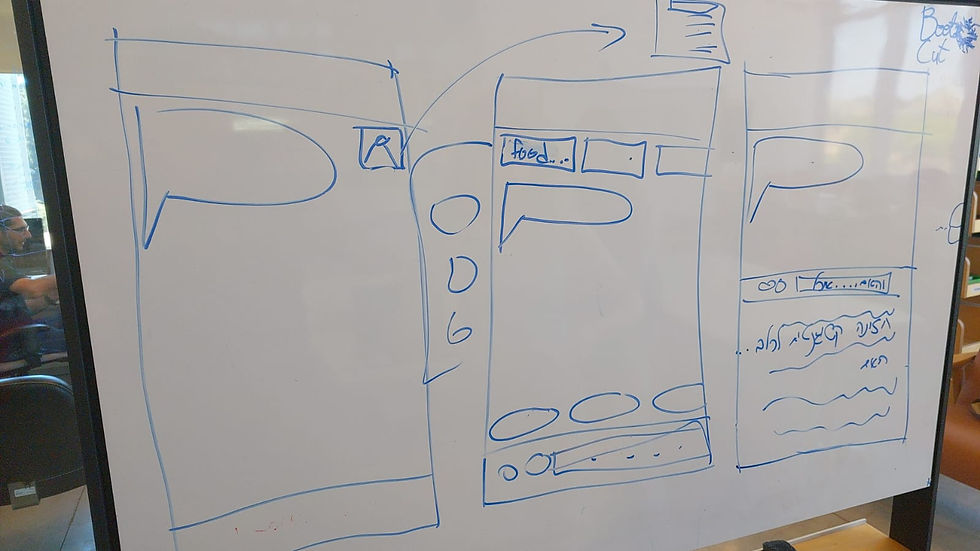
As part of our app development process, we focused on creating realistic user scenarios to help us refine how our app would interact with dog owners. The idea was to map out specific situations in which our target user would engage with the app. For each scenario, we outlined three key elements:
User Action: What the dog owner would do when using the app. This could involve actions like recording a video of her dog, entering behavioral observations, or watching a tutorial.
App’s Response: This is what happens in the background as the user interacts with the app. The app analyzes her input (whether it's video, data, or behavior description) and processes it to generate helpful insights or suggestions.
App Feedback: The app then provides the user with useful feedback, which might be in the form of advice, learning tips, or personalized recommendations to improve her interaction with her dog based on the behavior she’s observed.
By mapping out these scenarios, we were able to better understand the user's journey and fine-tune both the functionality of the app and the story we wanted to tell through the design. This approach helped us ensure that the app would be not only useful but also intuitive and engaging for dog owners.
Each scenario also allowed us to think about how the app could offer valuable feedback, reinforcing our core values of education, empathy, and active involvement. For example, when the user records her dog’s behavior, the app doesn’t just show data—it provides actionable advice that enhances her relationship with her dog, empowering her to respond thoughtfully and appropriately.
This process was crucial in shaping the final product and ensuring that the app would meet the needs of dog owners in a meaningful way.


As part of our seminar, in order to better understand the signals of dogs, we conducted "association maps." The goal was to organize the information we gathered from articles and research in a clear and structured way, so that we could use it effectively in our project and develop a deeper understanding of the signals dogs give. Through the association maps, we were able to map out the various signals dogs use and better understand their meanings.
We also created association maps to explore the benefits for humans in understanding their dogs, as well as the benefits for the dogs themselves when humans are able to interpret their signals. This process helped us connect the emotional and practical aspects of human-dog communication, providing valuable insights for our app's development.



Comments